



















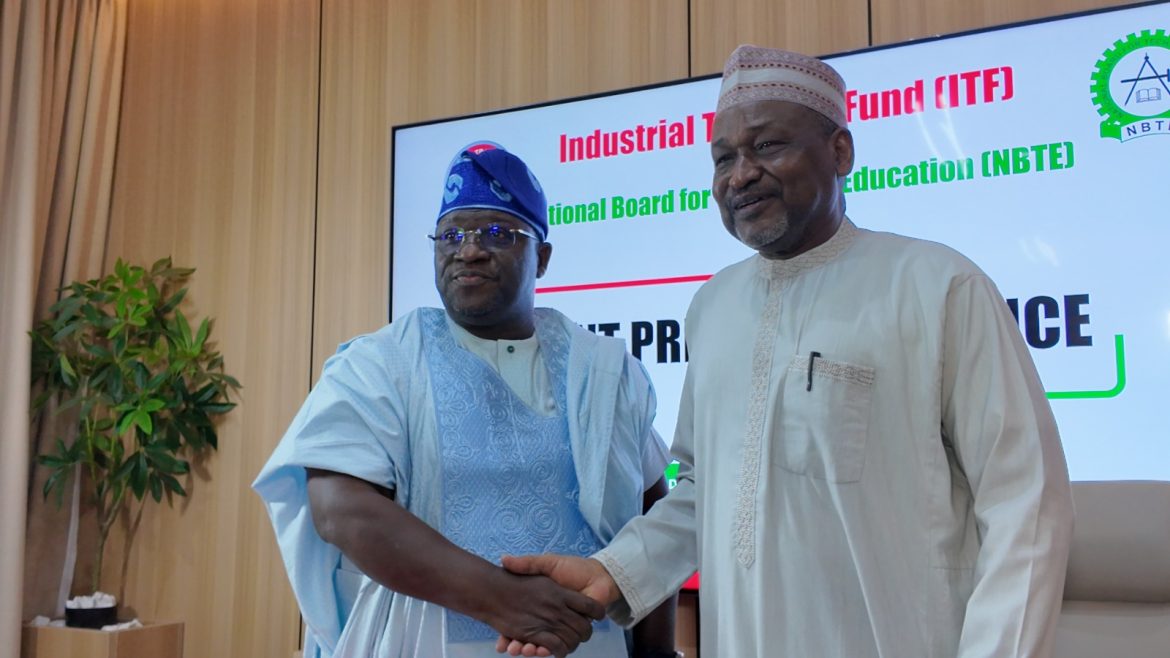


President Bola Tinubu has directed a clearer division of responsibilities between the Industrial Training Fund (ITF) and the National Board for Technical Education (NBTE) to eliminate overlapping roles in Nigeria’s skills development ecosystem.



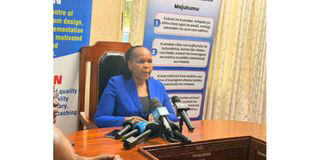
Speaking at a joint press conference in Abuja, ITF Director-General, Dr Afiz Oluwatoyin Ogun, said the National Council on Skills had directed the Fund to regulate and coordinate activities within the informal skills sector to better align workforce training with industry needs.

According to him, the decision addresses long-standing ambiguity among government agencies involved in skills development. He noted that only about seven per cent of Nigerians are engaged in white-collar jobs, while the remaining 93 per cent work in the informal sector, underscoring the need for stronger support for artisans and vocational workers.

Dr Ogun said the collaboration between ITF and NBTE would advance the Renewed Hope Agenda by tackling unemployment, promoting industrialisation, and positioning Nigeria as a hub for skilled labour export to boost economic growth and increase the country’s Gross Domestic Product (GDP).


He urged artisans to take advantage of government programmes designed to improve productivity and enhance their contributions to national development.
Also speaking, NBTE Executive Secretary, Prof. Idris Bugaje, clarified that the Board would continue to regulate skills education within formal institutions such as polytechnics, colleges, and technical institutions, while ITF would oversee post-graduation skills development and training in the informal sector.
Bugaje described technical and vocational education as essential for job creation, wealth generation, and poverty reduction. He pledged continued collaboration with ITF to strengthen Nigeria’s skills ecosystem in line with international best practices.






 EduTimes Africa, a product of Education Times Africa, is a magazine publication that aims to lend its support to close the yawning gap in Africa's educational development.