
























A physical disability should never determine how far a student can go in school. Yet for many young Nigerians, it has often made the journey to higher education more difficult.
But over the past 10 years, more than 4,200 candidates with disabilities have gained admission into universities, polytechnics and colleges of education across Nigeria through the Joint Admissions and Matriculation Board (JAMB) Equal Opportunity Group (JEOG).

The milestone was announced on Wednesday by the Chairman of JEOG and former Executive Secretary of the National Universities Commission, Emeritus Prof. Peter Okebukola, during the 2026 JAMB National Stakeholder Engagement on Inclusivity and Higher Education held at the National Universities Commission headquarters in Abuja.
JEOG was established by the outgoing JAMB Registrar, Prof. Is-haq Oloyede, to ensure that candidates with disabilities have equal access to the Unified Tertiary Matriculation Examination (UTME) and admission into tertiary institutions.

According to Okebukola, the programme has recorded remarkable success over the past decade, with an average of 53 per cent of participating candidates gaining admission into universities, polytechnics and colleges of education every year.
The beneficiaries include candidates with visual impairment, autism, Down syndrome, albinism and other disabilities.
«”In the last 10 years, we have had 4,216 candidates with different categories of disabilities participate in the programme. On average, about 53 per cent of them gain admission into universities, polytechnics and colleges of education every year,” he said.»
Okebukola stressed that candidates with disabilities are assessed using the same academic standards as every other UTME candidate.

«”We do not lower standards for them. They answer the same questions as every other candidate. I am continually amazed by how excellently they perform. Many of them are exceptionally brilliant,” he said.»
He noted that many of the beneficiaries have excelled in competitive disciplines, including Law, demonstrating that disability is not a barrier to academic excellence when the right support is provided.
Looking ahead, Okebukola said stakeholders are exploring how Artificial Intelligence (AI) can be deployed to make higher education more inclusive.
«”We are reviewing what we have achieved in the last 10 years and looking ahead. One of the major issues that will shape the future of higher education is Artificial Intelligence, and we are examining how AI can improve the efficiency of inclusivity in higher education,” he said.»
As part of activities marking the programme’s anniversary, two books were unveiled.
One of them, A Peep into the Future of Higher Education in Nigeria, was produced in honour of Prof. Oloyede and features contributions from 44 scholars on the future of Nigeria’s higher education system.
The second, Early Start, Great Finish: Survival and Success – Manual for Underage Students in Nigerian Universities, authored by Okebukola, provides guidance for parents, lecturers and university administrators on supporting exceptionally gifted students admitted before the age of 16. The manual was developed after consultations with 468 scholars and underage students, focusing on issues such as bullying, emotional adjustment and social integration.
The event also featured tributes to Prof. Oloyede from education stakeholders, including the Executive Secretary of the Tertiary Education Trust Fund (TETFund), Dr. Sonny Echono, who commended the outgoing JAMB Registrar for reforms that have strengthened the credibility of the UTME and expanded access to higher education for persons with disabilities.
JAMB also recognised outstanding members of its staff, particularly those in its Information Technology Department, for their dedication and innovation in improving the board’s operations.
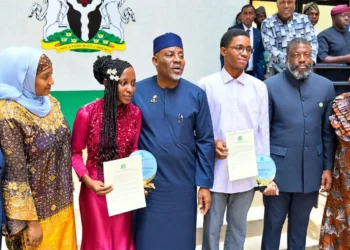
Several tertiary institutions were equally honoured for their commitment to admitting and supporting candidates with disabilities, in line with JAMB’s drive for a more inclusive higher education system.
The progress recorded over the past decade shows that when barriers are removed and equal opportunities are created, students with disabilities can thrive just like every other learner. For many young Nigerians, the initiative is proving that ability not disability should define a student’s future.











 EduTimes Africa, a product of Education Times Africa, is a magazine publication that aims to lend its support to close the yawning gap in Africa's educational development.