




















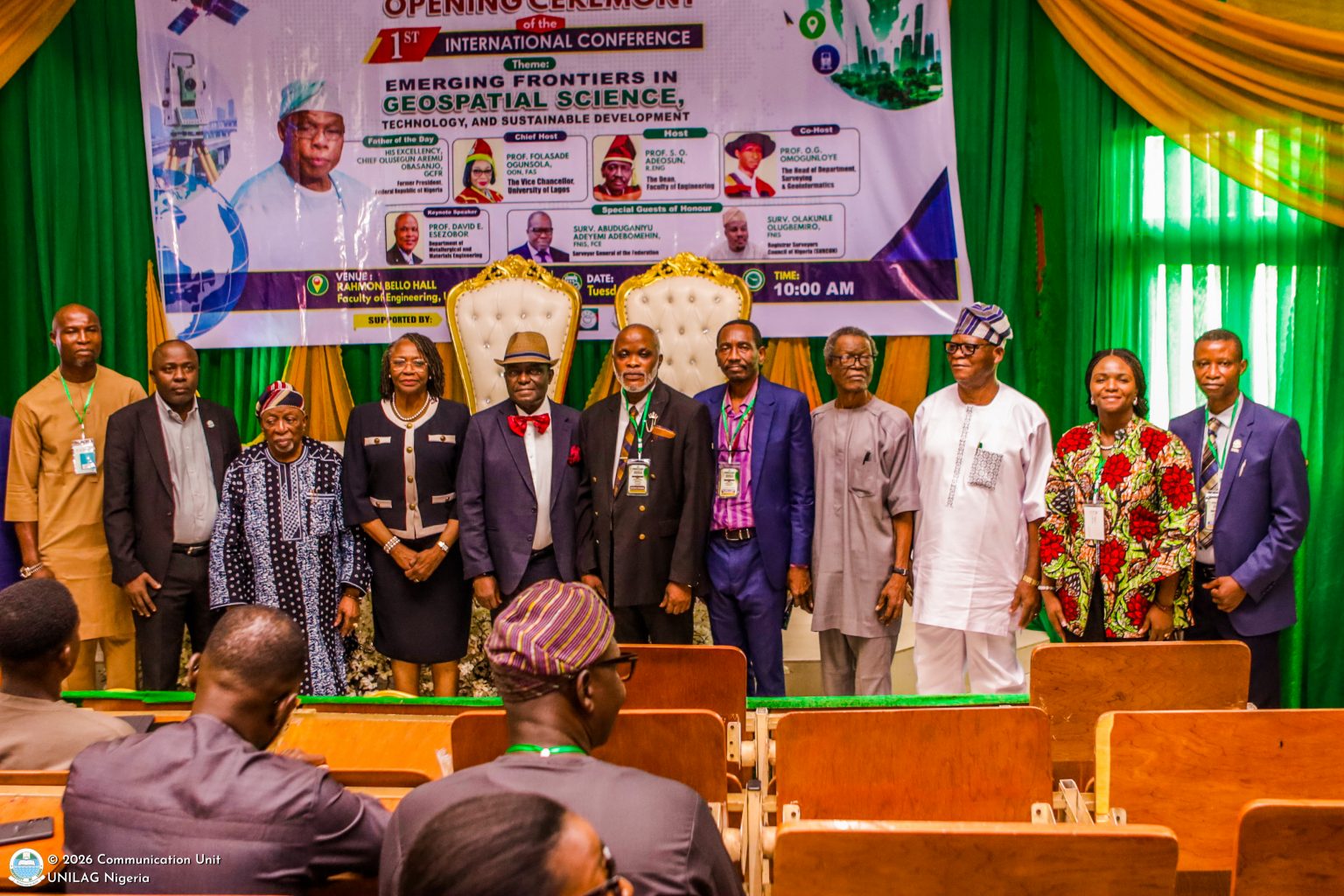


The University of Lagos (UNILAG) has reaffirmed its commitment to research, innovation and technological advancement with the commencement of its maiden International Conference on Geospatial Science and Geoinformatics, bringing together academics, policymakers, researchers and industry experts to explore how geospatial technologies can drive sustainable development and effective resource management.


The three-day conference, which began on Tuesday at the Rahmon Bello Hall, Faculty of Engineering, is themed “Emerging Frontiers in Geospatial Science, Technology, and Sustainable Development.”

Declaring the conference open, the Vice-Chancellor, Professor Folasade Ogunsola, said geospatial science and geoinformatics have become increasingly important as Nigeria seeks to diversify its economy beyond crude oil through the sustainable exploration and management of its solid mineral resources.
She noted that universities have a responsibility not only to generate knowledge but also to develop practical, research-driven solutions to national challenges while producing skilled professionals capable of driving economic growth.

Delivering the keynote address, Professor David Esezobor of the Department of Metallurgical and Materials Engineering said sustainable development requires more than technological advancement, stressing that meaningful progress depends on the combination of innovation, human expertise and responsible governance.

He identified inadequate data infrastructure, high technology costs, weak institutional collaboration and limited access to advanced digital tools as some of the major challenges facing the geospatial sector.
To address these challenges, Esezobor called for increased investment in geospatial education, stronger collaboration among government, academia and industry, wider adoption of open-data policies and greater support for indigenous technological innovation.

According to him, emerging technologies such as GeoAI, digital twins and advanced spatial analytics are transforming decision-making in urban planning, environmental management, agriculture, disaster risk reduction and natural resource management.
Representing former President Olusegun Obasanjo, Professor Peter Okebukola, former Executive Secretary of the National Universities Commission (NUC), described Nigeria’s investment in space science, including the establishment of the National Space Research and Development Agency (NASRDA) and the launch of NigeriaSat-1, as strategic decisions that continue to support national development.
He emphasised that countries seeking sustainable development and improved national security must invest in modern geospatial technologies to effectively monitor natural resources, infrastructure and environmental changes.
Okebukola also commended UNILAG for sustaining its tradition of academic excellence and urged the institution to continue strengthening its research and innovation capacity.
Earlier, the Dean of the Faculty of Engineering, Professor Samson Adeosun, and the Head of the Department of Surveying and Geoinformatics, Professor Olushola Omogunloye, described the conference as a significant platform for collaboration, knowledge sharing and innovation in geospatial science.
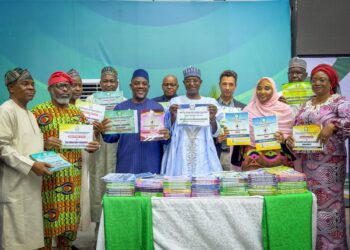
A major highlight of the opening ceremony was the presentation of awards to Vice-Chancellor Professor Folasade Ogunsola, former President Olusegun Obasanjo and Professor David Esezobor in recognition of their contributions to higher education, technological advancement and national development.
Other recipients included Emeritus Professor Francis Fajemirokun, Professor C.U. Ezeigbo and Professor James Olaleye.
The conference will feature technical sessions, paper presentations and industry engagements until Thursday, with participants exploring the application of geospatial science in mineral exploration, urban planning, environmental management, agriculture and sustainable development.









 EduTimes Africa, a product of Education Times Africa, is a magazine publication that aims to lend its support to close the yawning gap in Africa's educational development.