






















1. She was the first female student to attend Abeokuta Grammar School.
You might also like thesePosts
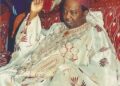

2. She later became the first Nigerian woman to drive a car.

3. She was a teacher before becoming a full-time activist.
4. She married Reverend Israel Oludotun Ransome-Kuti, an Anglican priest and educationist.

5. She was the mother of Fela Anikulapo Kuti, the Afrobeat pioneer.
6. She founded the Abeokuta Women’s Union (AWU) in the 1940s.
7. Through AWU, she led protests against unfair taxation imposed on women by colonial authorities.
8. She played a key role in forcing the Alake of Egbaland (a traditional ruler) to abdicate temporarily in 1949.
9. She was one of the founders of the Nigerian Women’s Union.
10. She was also a founding member of the National Council of Nigeria and the Cameroons (NCNC) political party.
11. In 1947, she was part of a delegation that traveled to London to demand greater rights for Nigerians.
12. She was a vocal campaigner for women’s education and political representation.
13. She was the first woman in Nigeria to earn the title “chieftaincy” in Egba land, as the “Beere of Egbaland.”

14. She was one of the women who advocated for Nigeria’s independence from Britain.
15. She visited China in 1956 as part of a women’s delegation and met with Chairman Mao Zedong.
16. The CIA once described her as the “most dangerous woman in Africa” because of her activism.
17. She was deeply involved in anti-colonial struggles, especially against British rule.
18. She raised strong activist children—Fela (musician), Beko (doctor), and Olikoye (public health advocate).
19. She suffered fatal injuries in 1978 after being thrown from a second-floor window during a military raid on Fela’s Kalakuta Republic.
20. Today, she is remembered as the “Lioness of Lisabi”, a fearless defender of justice, women’s rights, and Nigerian independence.











 EduTimes Africa, a product of Education Times Africa, is a magazine publication that aims to lend its support to close the yawning gap in Africa's educational development.