





















For many displaced young people, the problem is not a lack of talent or ambition — it is proving their education counts.
That reality is driving a new partnership between cambridge.org and the alsamaproject.com to develop and scale a school-leaver qualification aimed at helping refugees and displaced youth access university, vocational training and employment in Nigeria and beyond.

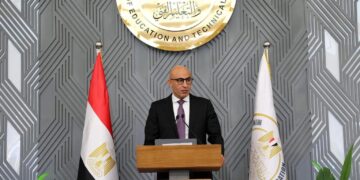
The agreement was signed during the Education World Forum in the presence of senior representatives of the United Nations Educational, Scientific and Cultural Organisation and the United Kingdom Foreign, Commonwealth and Development Office.
Under the partnership, Cambridge and Alsama Project will work to expand the G12++ qualification internationally and improve its recognition among universities, employers and policymakers.

Unlike conventional examinations, the G12++ curriculum is designed to align with international standards while remaining relevant to learners in refugee settings.
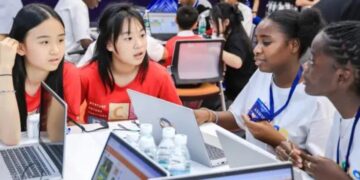
The qualification focuses on capability rather than memorisation, using real-life situations to assess critical thinking, soft skills and learner potential.
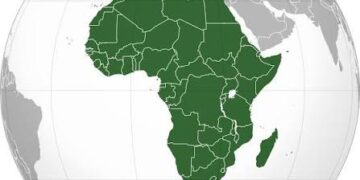
According to data from the United Nations High Commissioner for Refugees, Nigeria currently hosts 3.6 million displaced people, while the global number of forcibly displaced people stands at 117.3 million, including 49 million children.
Yet, despite the scale of displacement, only nine per cent of refugees worldwide access higher education compared with a global average of 42 per cent.
The organisations said this gap reflects a
major challenge: many displaced young people lack recognised school certificates required for university admission, vocational programmes or employment, even when they possess the ability to succeed.
The G12++, developed by the Beirut-based Alsama Project, was created to address this barrier.

Originally inspired by Alsama students, the qualification serves as an alternative to traditional secondary school exit examinations for learners whose education has been disrupted by displacement.
Over the past two years, Cambridge has worked with Alsama to strengthen the assessment model and support the development of the examinations.
The latest agreement will expand the programme internationally, improve recognition among universities and employers, engage governments and international organisations, and support implementation through partnerships and funding.
Speaking at the signing ceremony, Managing Director, Partnership for Education at Cambridge, Jane Mann, described the initiative as a response to a growing global education crisis.
“In times of conflict, education is so often among the first casualties. The global education crisis caused by forced displacement will only grow as climate change and conflict uproot more young people. When young people are forced to leave school and flee, it’s not only their past they leave behind, but their future too,” Mann said.
“Working with Alsama Project, we will help them take back their future through a new global qualification that will open pathways to universities, vocational programmes and employment. Displaced youth in Nigeria and across the globe need models that reflect their realities, and the world needs their talents,” she added.
Co-Founder and Chief Executive Officer of Alsama Project, Meike Ziervogel, described the partnership as a milestone for displaced youth.
“The barrier has never been ability. What has been missing is recognition. The G12++ exists to change that, and Cambridge’s partnership is what makes that argument impossible to ignore,” Ziervogel said.
Also speaking, Pro-Vice-Chancellor for Education and Environmental Sustainability at the University of Cambridge, Bhaskar Vira, said the initiative shows that quality assessment for displaced and marginalised learners is achievable and replicable.
Advisor and former Headmaster of Westminster School, Patrick Derham, added that the qualification addresses barriers preventing many talented young people from accessing further education and work.
Credit: TheGuardian











 EduTimes Africa, a product of Education Times Africa, is a magazine publication that aims to lend its support to close the yawning gap in Africa's educational development.