

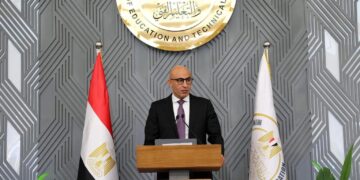

























The Minister of Education, Dr. Olatunji Alausa, has raised concerns over the high level of learning poverty among Nigerian children, revealing that about 75 per cent of pupils at the basic education level are unable to read and understand age-appropriate texts.
Alausa made the disclosure on Tuesday in Abuja during the Federal Ministry of Education (FME) and Universal Basic Education Commission (UBEC) Roundtable Convening Meeting on Digital Resources Available to Achieving Learning Outcomes.

According to the minister, learning poverty refers to a child’s inability to read and comprehend a simple, age-appropriate text by the age of 10.
He described the situation as alarming and stressed the need for Nigeria to embrace digital technology to improve learning outcomes.

“We don’t have a choice. We have to use technology. It is no longer feasible to continue to do things manually. Digital learning is the future, and we must deploy it to every part of the country, including the most rural communities,” Alausa said.
He urged state governments, particularly Commissioners for Education and Chairmen of State Universal Basic Education Boards (SUBEBs), to maximise the use of digital learning platforms developed by the Federal Government. These include the Nigeria Learning Passport, Inspire, Ignite, EduRevamp, E-Learn, the Greenfield Learning Management System (LMS), and virtual classroom solutions.
The minister explained that the platforms are designed to complement classroom teaching by providing curriculum-aligned lessons and helping to address the shortage of qualified teachers, particularly in Mathematics, English, Physics and Chemistry.
Despite significant investment in the platforms, Alausa expressed concern over their low level of utilisation.
He noted that while the Nigeria Learning Passport has recorded about 2.3 million users, the figure remains low compared to the country’s estimated 67 million learners across primary, junior secondary and senior secondary schools.

“We have invested significant resources in these platforms. If they are not used, then it becomes a wasted investment. We cannot continue to suffer in the midst of plenty,” he said.
The minister commended UNICEF for supporting the development of the Nigeria Learning Passport, noting that the platform played a vital role in sustaining learning during the COVID-19 pandemic and has continued to support students affected by insecurity and school closures.
He also called on states to organise orientation programmes for teachers and school leaders to promote the effective use of digital learning tools and monitor their implementation.
Earlier, UBEC Executive Secretary, Dr. Aisha Garba, said technology has become essential to building an inclusive, resilient and future-ready education system.
She highlighted the commission’s efforts to establish digital learning centres in schools, deploy smart interactive boards, strengthen education data systems, and introduce digital monitoring and evaluation platforms.
Garba added that UBEC had inaugurated Digital Champions to drive technology adoption across the commission and support states in implementing education technology initiatives.
She, however, stressed that technology alone cannot transform education without effective collaboration, capacity building and a commitment by stakeholders to embrace innovation.














 EduTimes Africa, a product of Education Times Africa, is a magazine publication that aims to lend its support to close the yawning gap in Africa's educational development.